Manufacturing Process of PO/PE Lined Steel Pipes via Rotolining Process

PO/PE lined plastic steel pipe is a composite pipe using steel pipe as the substrate. plastic powder is evenly melted and adhered to the pipe wall via rotary heating to form a dense anti-corrosion lining. The manufacturing process features stable technology and strong bonding force. The specific procedures are as follows:
First, Steel Pipe Pretreatment
Seamless steel pipes or welded steel pipes are selected and cut to the designed dimensions. The pipe ends are then beveled and polished to remove burrs and flash for smooth pipe orifices. The inner wall of the steel pipe is treated by sandblasting or shot blasting to eliminate scale, rust and oil contamination, creating a uniformly rough surface on the inner wall and improving the adhesion between plastic coating and steel. After treatment, compressed air is used for purging to prevent residual dust from affecting forming quality.
Next, Load Powder
Weigh plastic powder such as polyethylene PE and PO powder according to the pipe diameter and lining thickness, and load the powder into the steel pipe. Seal both ends of the steel pipe with flange covers or special plugs to prevent powder leakage during rotation and maintain a relatively closed interior for uniform adhesion.
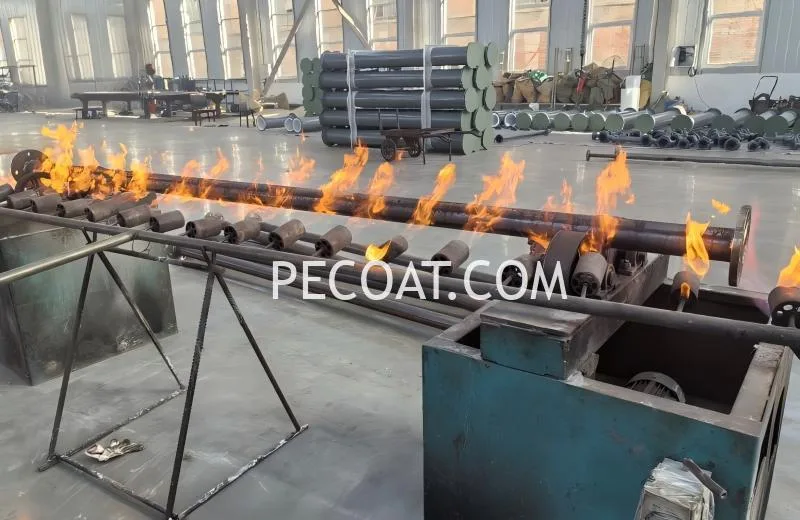
Third,Rotary Heating And Rotomolding Forming
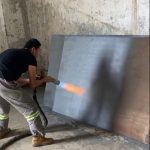
Mount the steel pipe on a rotomolding machine for axial rotation and circumferential tumbling simultaneously. Heat the steel pipe evenly by flame or electric heating, with temperature controlled within 240-260℃. Under high temperature, the plastic powder gradually melts, flows and coats the pipe wall uniformly, forming a continuous, bubble-free and pinhole-free dense lining layer. Temperature and rotating speed must be strictly controlled in this step to avoid uneven lining thickness or local scorching.
Fourth, Cooling And Shaping
Once the plastic lining is uniformly melted, stop heating. Cool the steel pipe gradually to room temperature by natural air cooling or forced air cooling while maintaining low-speed rotation. Slow cooling prevents shrinkage and cracking of the lining caused by rapid cooling, ensuring tight bonding between the lining and steel pipe without delamination or hollowing.
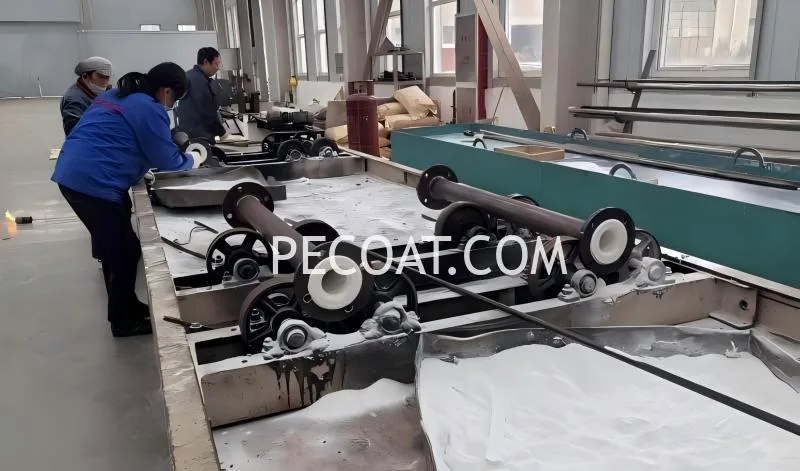
Final,Trimming and Inspection
Remove the end seals and trim the lining at pipe ends to be flush with the orifices, facilitating subsequent flange welding and installation. Conduct visual inspection to guarantee a smooth lining surface. Then perform spark test to check for pinholes, cracks and other defects. Hydrostatic test is also carried out to verify the sealing performance and pressure-bearing capacity of the pipe.
This one-time forming process delivers seamless and high-integrity linings with outstanding anti-corrosion performance. The manufactured pipes are widely used for transporting corrosive media in chemical, power, water treatment and other industries.