
Category: Application of Thermoplastic Powder Coating
Thermoplastic powder coatings are a type of powder coating that is applied to a substrate using heat. The powder coating material is made up of thermoplastic polymers that can be melted and solidified repeatedly without undergoing any significant chemical changes. This feature makes thermoplastic powder coatings highly versatile and ideal for a wide range of applications. Here we will list some of the application of thermoplastic powder coating in detail.
Automotive Industry
Thermoplastic powder coatings are widely used in the automotive industry to protect various components from corrosion and wear. These coatings are applied to parts such as wheel rims, engine blocks, and other metal parts to improve their durability and resistance to harsh environmental conditions. In addition, thermoplastic powder coatings can provide a smooth, glossy finish that enhances the appearance of the vehicle.
Aerospace Industry
The aerospace industry also uses thermoplastic powder coatings to protect various components of aircraft from corrosion and wear. These coatings are applied to parts such as landing gear, engine components, and structural members. In addition, thermoplastic powder coatings can provide a low coefficient of friction, which reduces drag and improves fuel efficiency.
Construction Industry
The construction industry uses thermoplastic powder coatings to protect various metal components from corrosion and wear. These coatings are applied to parts such as window frames, metal roofs, and steel structures. In addition, thermoplastic powder coatings can provide a decorative finish that enhances the appearance of the building.
Medical Industry
The medical industry uses thermoplastic powder coatings to protect various medical equipment from corrosion and wear. These coatings are applied to parts such as surgical instruments, medical devices, and hospital beds. In addition, thermoplastic powder coatings can provide a hygienic surface that resists bacterial growth and can be easily cleaned.
Electrical Industry
The electrical industry uses thermoplastic powder coatings to protect various electrical components from corrosion and wear. These coatings are applied to parts such as switchgear, transformers, and electrical enclosures. In addition, thermoplastic powder coatings can provide electrical insulation that prevents electrical arcing and improves the performance of the equipment.
Marine Industry
The marine industry uses thermoplastic powder coatings to protect various components of ships and boats from corrosion and wear. These coatings are applied to parts such as hulls, decks, and superstructures. In addition, thermoplastic powder coatings can provide a low coefficient of friction, which reduces drag and improves fuel efficiency.
Sports Equipment Industry
The sports equipment industry uses thermoplastic powder coatings to protect various equipment from corrosion and wear. These coatings are applied to parts such as golf clubs, hockey sticks, and tennis racquets. In addition, thermoplastic powder coatings can provide a decorative finish that enhances the appearance of the equipment.
Household Appliance Industry
The household appliance industry uses thermoplastic powder coatings to protect various appliances from corrosion and wear. These coatings are applied to parts such as washing machine drums, dryer drums, and dishwasher racks. In addition, thermoplastic powder coatings can provide a decorative finish that enhances the appearance of the appliance.
Packaging Industry
The packaging industry uses thermoplastic powder coatings to provide a protective layer for various products. These coatings are applied to parts such as metal cans, bottle caps, and food packaging. In addition, thermoplastic powder coatings can provide a decorative finish that enhances the appearance of the packaging.
Furniture Industry
The furniture industry uses thermoplastic powder coatings to protect various furniture from corrosion and wear. These coatings are applied to parts such as metal chair frames, table legs, and bed frames. In addition, thermoplastic powder coatings can provide a decorative finish that enhances the appearance of the furniture.
Manufacturing Process of PO/PE Lined Steel Pipes via Rotolining Process

PO/PE lined plastic steel pipe is a composite pipe using steel pipe as the substrate. plastic powder is evenly melted and adhered to the pipe wall via rotary heating to form a dense anti-corrosion lining. The manufacturing process features stable technology and strong bonding force. The specific procedures are as follows: First, Steel Pipe Pretreatment Seamless steel pipes or welded steel pipes are selected and cut to the designed dimensions. The pipe ends are then beveled and polished to removeRead More …
Full Automatic Fluidized Bed Dip Coating Line For Guardrail Of National Project

Project Background This set of equipment is developed for the production of guardrail components for the national South-to-North Water Diversion Project. The project features complex terrain including slope sections, which imposes stringent requirements on the anti-corrosion and weather-resistant performance of guardrails. The guardrail consists of intermediate main posts and joint main posts. Fabricated from Q235B welded special-shaped steel parts, these components require a dual-layer anti-corrosion system of hot-dip galvanizing followed by dip-coating, with a galvanizing weight of 270 g/m², dip-coating filmRead More …
How To Use PECO303 Thermoplastic Powder Coating for Electroplating Fixture and Jigs

How To Use PECO303 Thermoplastic Powder Coating for Electroplating Fixture and Jigs Here is a video for your reference: https://www.instagram.com/p/DcGF1Wcz6QY/
PA Nylon Powder Coating for Spline Shafts Extend Service Life
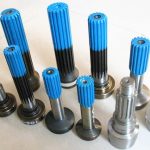
The nylon powder coating for spline shafts is a special functional coating suitable for spline shaft transmission scenarios. It is widely used in fields such as automobiles and agricultural machinery. Its core values are to improve the wear resistance of spline shafts, reduce transmission noise, and extend service life. 1. Common Coating Types and Characteristics Coating Type Core Characteristics Application Scenarios Nylon 11 (PA11) High hardness, excellent wear resistance, good chemical resistance, solvent resistance and weather resistance, strong adhesion, suitableRead More …
Thermoplastic Polyethylene LDPE Powder Coat for Clothes Hanger
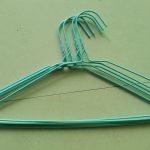
Thermoplastic polyethylene LDPE powder coating for metal clothes hangers is a coating material that takes low – density polyethylene (LDPE) as the base material and is applied to the surface of clothes hangers through specific processes. The following is a detailed introduction to it: Basic Information Composition: It is mainly made of high-pressure polyethylene (LDPE) as the base material, and is equipped with a variety of functional additives and color pigments. Functional additives can enhance the performance of the coating,Read More …
Enhance Electroplating Jigs with Thermoplastic PE Powder PECOAT®EJ3065

PECOAT®EJ3065 is specially designed for electroplating jigs fixtures. Its outstanding resistance to acid and alkali corrosion, coupled with high – temperature stability, offers a level of protection that traditional materials simply cannot match. Understanding Thermoplastic PE Powder Coat Thermoplastic PE powder coat, or polyethylene powder coating, is a thermoplastic polymer-based coating material applied through a process called fluidized bed dipping process. Unlike liquid paints, PE powder coat is fluidized bed dipped onto the surface of electroplating jigs and then cured under heat,Read More …
Use PVC Plastisol Coat to Protect Medicine Glass Bottle

Using PVC plastisol coating to protect medicine glass bottles is a feasible technical approach, which can endow glass bottles with functions such as impact resistance, anti-slip, and chemical corrosion resistance. The following is a detailed introduction to this application, including advantages, processes, considerations, and alternative solutions: Advantages of PVC Plastisol Coating for Pharmaceutical Glass Bottles Enhanced Impact Resistance PVC plastisol forms a flexible protective layer on the glass surface, which can absorb external impacts and reduce the risk of bottleRead More …
Relationship Between Bulk Density and Specific Density
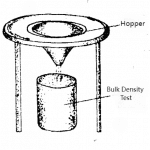
Bulk density and specific density (also known as true density or specific gravity) are related concepts in the study of materials, especially in fields like materials science, geology, and soil science. Here’s how they are related: Definitions Bulk density (ρb): It is the mass of a material per unit volume, including the volume of pores and voids within the material. It is given by the formula ρb=m/Vt, where m is the mass of the material and Vt is the total volume of the material, includingRead More …
Why Use Polyethylene PE Coatings on Metal Firewood Baskets

What is a Metal Firewood Basket? A metal firewood basket is a specialized container designed for storing, transporting, and displaying firewood in indoor or outdoor settings. Typically crafted from durable metals like wrought iron, steel, or galvanized steel, these baskets feature robust frameworks and often incorporate functional elements such as: Mesh or Perforated Sides: Allows airflow to prevent moisture buildup and keep firewood dry. Handles: For easy carrying, especially when filled with logs. Decorative Designs: Some models include ornamental patternsRead More …
What is Difference Between Welded Wire Mesh and Dutch Wire Mesh

Welded Wire Mesh and Dutch Wire Mesh are two common types of metal wire mesh, primarily differing in material, structure, application, and production process. Below is a detailed comparison: 1. Material and Production Process Welded Wire Mesh Material: Typically made of low-carbon steel wire, stainless steel wire, or galvanized steel wire. Process: Produced using resistance welding to fix the intersections of longitudinal and transverse wires, forming a uniform grid structure. Surface Treatment: Can be galvanized, powder-coated, or PVC-coated to enhanceRead More …