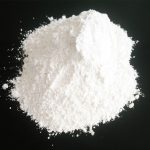
Application Methods of PTFE Powder Resin, 20 – 900 microns
Posted by: PECOAT | on March 20, 2026
1. Compression Molding
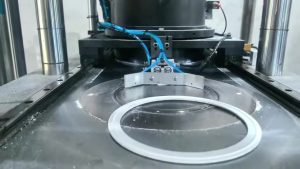
- Raw material: Suspension PTFE powder
- Process: Sieve powder → room-temperature cold pressing (10–50 MPa) → preform → sintering at 360–380 °C → slow cooling → machining
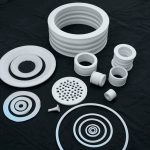
- Products: Sheets, rods, gaskets, sealing rings, valve seats
2. Paste Extrusion
- Raw material: Fine dispersed PTFE powder
- Process: Mix with extrusion aid (15–25%) → preform → plunger extrusion → de-oiling at 150–250 °C → sintering
- Products: Thin-walled tubes, wire insulation, thread seal tape
3. Isostatic Molding
- Process: Powder in flexible mold → pressure 50–100 MPa → uniform preform → sintering
- Features: High density, uniform structure for large or precision parts
4. Coating Applications
- Electrostatic spraying: PTFE powder coated onto substrate → sintering at 380–400 °C
- Dipping / spin coating: Dipping parts in PTFE dispersion → drying → sintering
- Products: Non-stick cookware, anti-corrosion equipment, rollers
5. Filled Modification
- Method: Blend PTFE powder with graphite, carbon fiber, copper powder, glass beads, etc. → compression / extrusion → sintering
- Purpose: Improve wear resistance, thermal conductivity and creep resistance
Key Notes
- PTFE does not melt flow; cold pressing + sintering is required.
- Sintering temperature ≤ 385 °C to avoid degradation.
- Slow heating and cooling to prevent cracking.
- Shrinkage rate: 3.1–5.0%, mold size needs compensation.
Views: 57