
How To Eliminate Sagging And Air Bubble In PVC Dip Coating,Dip Moulding

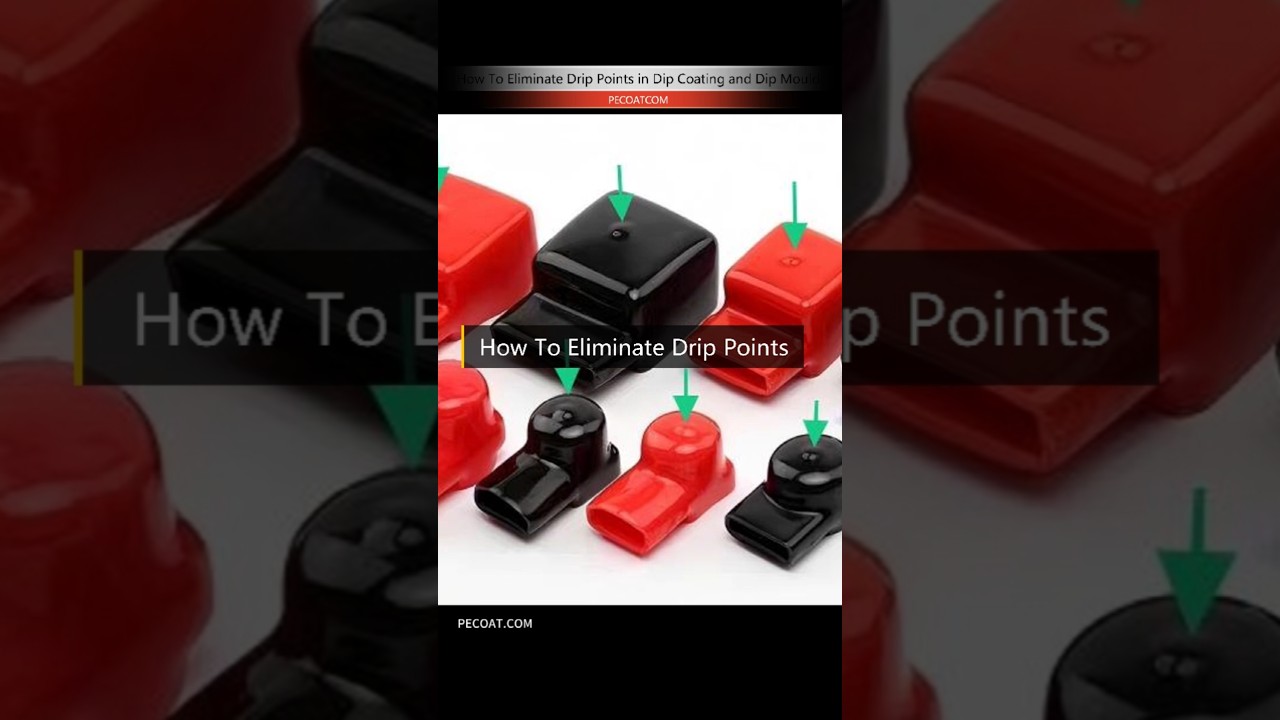
Fluidity is a characteristic property of liquids. When a liquid adheres to a solid surface and flows along it, droplets form at the edges of the object. In industry, this droplet formation is referred to as the “sagging phenomenon” or “dripping point”. PVC plastisol liquid behaves exactly like this: when a workpiece is dipped into the plastisol and then lifted out, sagging occurs at the lower end of the workpiece. This sagging can sometimes affect the product’s appearance or even its functional performance.
To address this sagging issue, a workpiece rotation function has been incorporated into the equipment design. This function enables the fluid to flow uniformly across the workpiece surface in multiple directions, eventually curing evenly on the surface. This provides a perfect solution to the sagging problem.
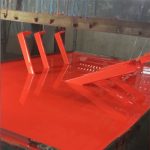
Another phenomenon encountered in production is the formation of air bubbles. When large-sized flat workpieces are dipped into the fluid, air bubbles often form at the bottom. These bubbles prevent the pvc plastisol from adhering to the bottom area of the workpiece, ultimately resulting in a missing coating on the bottom surface. To resolve this, a workpiece angled immersion function has been added to the equipment design. This function allows the workpiece to be immersed into the pvc plastisol at an extremely slow, angled pace, thereby preventing the formation of air bubbles.
The following video clearly demonstrates this process.
Related Posts:
 Choosing the Best PVC Dip Coating Supplier: Key Considerations
 PVC Plastisol Coating Line and PVC Plastisol for Dumbbell Production
 Adhesion Primer improve the adhesion bonding of PVC coatings
 Use PVC Plastisol Coat to Protect Medicine Glass Bottle
 Manufacturing Process of Plastic Coating
 Why thermoplastic powder does not bubble in fluidized bed?