
Why Sofubi & Vinyl Casting Toys Are Taking Over the Trendy Toy World
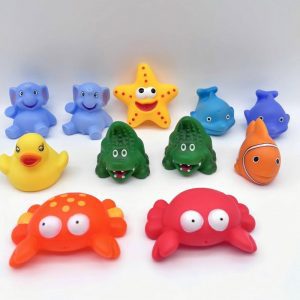
In the trendy toy market, “vinyl casting” is definitely a keyword full of buzz. Some praise it as a representative of high-end materials, others complain about its tendency to age and simple designs, while many are confused by terms like “Sofubi” and “hard vinyl”. In fact, most controversies stem from misunderstandings about this ancient craft .
Vinyl Casting: A Craft, Not a Material
Many people mistake “vinyl casting” for a special material after feeling the soft, elastic texture of vinyl toys. But the truth is, vinyl casting is essentially a rotational molding process using PVC plastisol as the raw material. The vinyl casting accurately describes its core operation: pour pasty PVC solution into a mold, let the paste evenly adhere to the inner wall through centrifugal rotation, then cure at high temperature and cool to form the product.
This craft first emerged in 1924, when the world’s first vinyl casting machine in Germany produced the “chocolate rabbit”, marking the beginning of the vinyl toy era. The rubber ducks we played with in the bath as kids and the hollow dolls that grew up with us are all products of vinyl casting. Based on the hardness of PVC raw materials, vinyl casting is divided into two types: hard vinyl (Hard Vinyl) with a rigid texture, and soft vinyl (Soft Vinyl) that’s gentle on the skin. The popular “Sofubi” in the trendy toy circle is the Japanese transliteration of “soft vinyl”, essentially Japanese-style soft vinyl casting.

Regular Vinyl Casting vs. Sofubi: Differences in Details, Not Essence
In recent years, Sofubi toys have seen soaring prices due to the “handmade” label, but their process logic is not fundamentally different from regular vinyl casting. Both follow the core flow of “injecting material – rotating – curing – demolding”, with the main differences concentrated in the heating and curing stage:
- Regular vinyl casting: Place the closed mold in a high-temperature vinyl casting oven, rotate slowly along two axes, and let the paste form by gravity;
- Sofubi: First mix and beat the raw materials into paste, pour into the mold, remove air bubbles with a centrifuge, then heat in an industrial oil bath. Subsequent secondary heating ensures the paste is fully cured, and the colloid is manually removed with pliers after cooling.
In short, Sofubi is an upgraded, refined version of regular vinyl casting, with stricter control over temperature and time — but it’s not an entirely new craft. Claims that “Sofubi is a special material” are just gimmicks to mislead consumers.
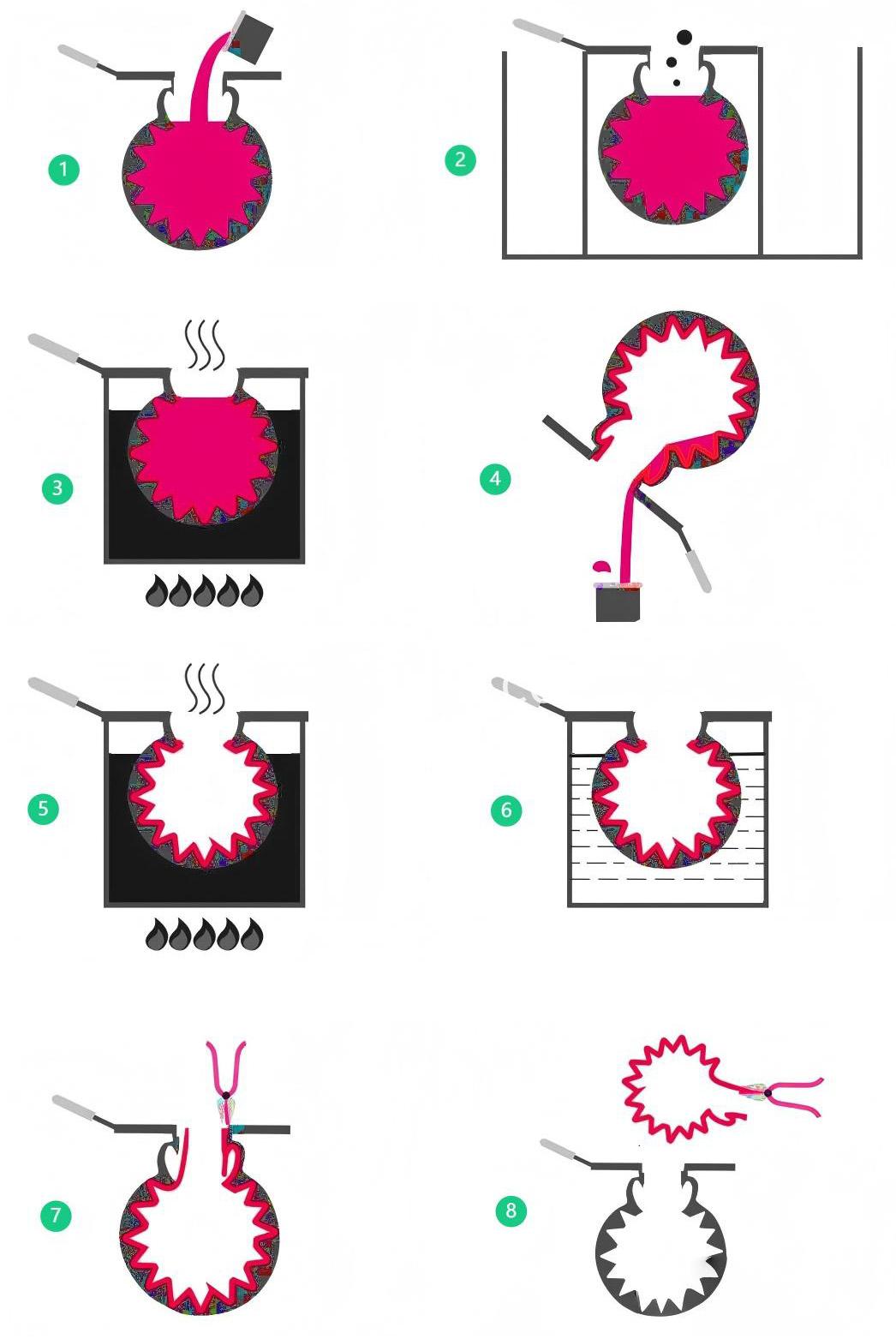
- Pour toy grade pvc plastisol into the mold.
- Place the mold in a centrifuge or vacuum machine, and draw a vacuum to remove air bubbles.
- Put the mold into an industrial oil bath for heating, so that the raw material adheres to the mold surface.(The longer the heating time, the thicker the finished product wall).
- Pour out the excess raw material (it can be recycled for reuse).
- Put the mold back into the oil furnace and heat it for 2-3 minutes to fully cure the entire rubber.
- Place the mold in water to cool it down.
- After cooling, pull out the rubber body (a clamp is needed to take out the rubber body).
- Successfully clamp out the rubber body.
Molds: The “Invisible Cost King” of Vinyl Toys
The high price of vinyl toys is largely due to the high cost of molds. Because the process requires a high-temperature environment, vinyl casting molds must be made of metal, with copper molds being the industry standard. Their production process is extremely time-consuming and labor-intensive:
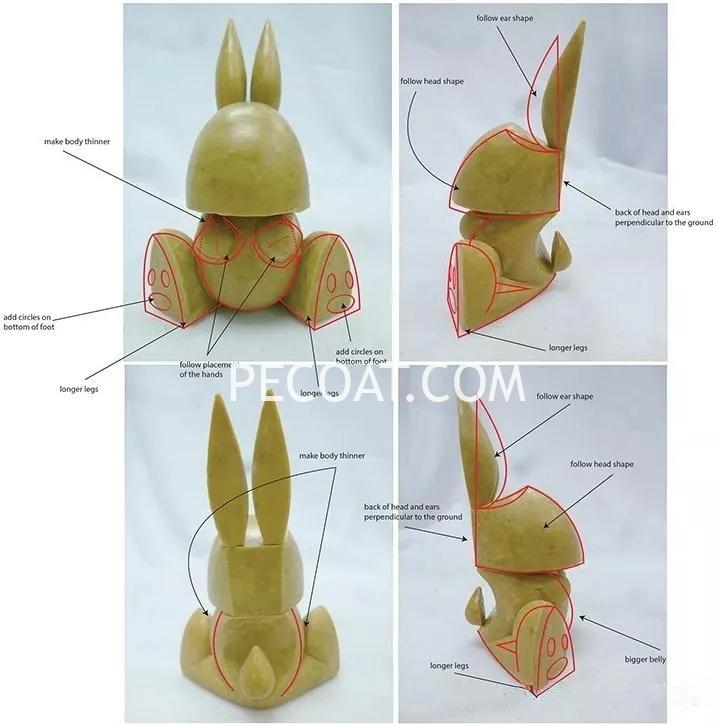
- First, carve the design prototype “clay model” manually or by machine to accurately restore the toy’s shape details;
- Reproduce the “wax model” based on the clay model, with a 3% shrinkage allowance (natural shrinkage occurs during subsequent mold duplication);
- Place the wax model in an electroplating tank to make a copper “master mold” through electrolytic reaction;
- Finally, duplicate the “production mold” from the master mold and weld it to a steel frame for mass production.
This process is not only cumbersome but also has a certain rejection rate, directly pushing up the initial investment cost of vinyl toys.
The “Duality” of Vinyl Toys: Advantages and Shortcomings Are Equally Distinct
Vinyl casting has maintained its popularity in the trendy toy circle thanks to its unique advantages, but its shortcomings are equally prominent:
Core Advantages
- No parting lines: The one-piece molding process results in a smooth surface, without the common joint marks of injection-molded toys;
- Excellent feel: The hollow structure combined with PVC material is lightweight, elastic, not easy to break when dropped, portable and suitable for handling;
- Large artistic space: Mainly hand-painted, allowing designers to give full play to their creativity, even creating unique “one off” pieces with maximum scarcity.
Obvious Shortcomings
- Design limitations: The fluidity of the paste means toy designs cannot be too complex; sharp protrusions or deep concave designs are prone to defects such as air bubbles and uncured vinyl;
- High labor dependence: Most links from demolding to painting require manual operation, resulting in low efficiency, large differences between finished products and high rejection rates;
- Material drawbacks: PVC materials are prone to deformation, cracking, oil leakage and other problems after long-term use, affecting collection life.
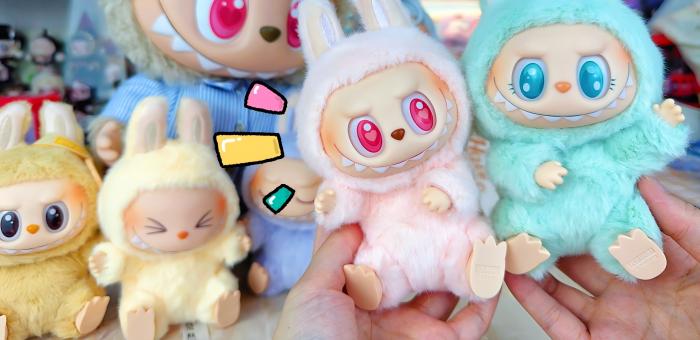
In fact, no craft is inherently superior or inferior. The “imperfections” of vinyl casting are precisely part of its charm. Those manual traces and slight differences give each vinyl toy a unique vitality. Whether you’re an ordinary player seeking cost-effectiveness or a collector obsessed with handcrafted texture, you can find joy in vinyl toys — the key is to understand the essence of the craft, not be trapped by “snobbery”, and choose what you truly love.
Related Posts:
 What is PVC Plastisol Vinyl Rotocasting ?
 Manufacturing Process of Plastic Coating
 Choosing the Best PVC Dip Coating Supplier: Key Considerations
 Adhesion Primer improve the adhesion bonding of PVC coatings
 Use PVC Plastisol Coat to Protect Medicine Glass Bottle
 How To Eliminate Sagging And Air Bubble In PVC Dip Coating,Dip Moulding